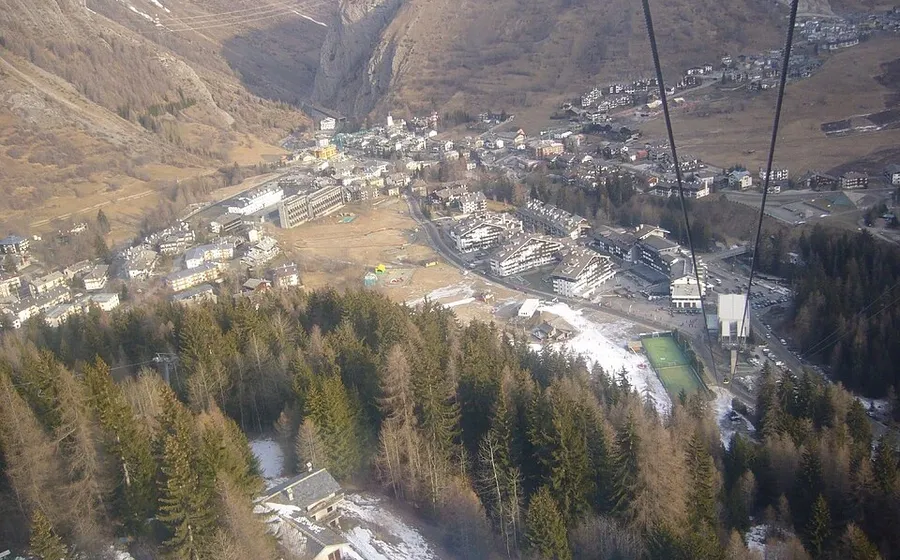
La Rosière is one of the most distinctive ski bases in the Haute-Tarentaise because its pistes cross the French-Italian border. The resort sits on a south-facing balcony at 1,850 m, while the Espace San Bernardo links La Rosière with La Thuile in Italy. Current official resort information lists 156 km of pistes across the combined domain, giving skiers the unusual option of skiing in France and Italy during the same day.
The French side is particularly well suited to families and intermediates, with broad cruising pistes, beginner areas and a friendly resort layout. The high point at Mont-Valaisan reaches 2,800 m and adds a more demanding side to the mountain. Two chairlifts serve five red and black runs there, including steep and ungroomed terrain for confident skiers. The Italian side around La Thuile adds further red and black skiing, so stronger skiers have substantially more to explore than the resort’s family reputation might suggest.
La Rosière’s altitude and aspect are another important part of its appeal. The village is high by French resort standards, while the ski area reaches well above 2,000 m. The south-facing French slopes receive plenty of sunshine, while the wider cross-border domain also includes differently oriented terrain on the Italian side. This combination helps La Rosière balance sunny skiing with access to higher, colder sectors.
The resort has a more relaxed atmosphere than some of the biggest Tarentaise destinations. Chalet-style buildings, family facilities and a quieter evening scene make it a strong choice for families, couples and mixed groups. The trade-off is nightlife: travellers looking for a large club and après-ski scene will find more choice in larger neighbouring resorts.
Access is straightforward through Bourg-Saint-Maurice, the nearest railway station, 20 km from La Rosière. Direct and seasonal long-distance trains serve Bourg-Saint-Maurice, and daily shuttles continue to the resort. Official access information lists Chambéry at 135 km, Lyon at 210 km and both Geneva and Grenoble at 215 km, with winter shuttle options from Geneva and Lyon.
For skiers who want reliable altitude, family-friendly terrain, sunny slopes and the novelty of crossing into Italy on skis, La Rosière offers a combination that few French resorts can match.