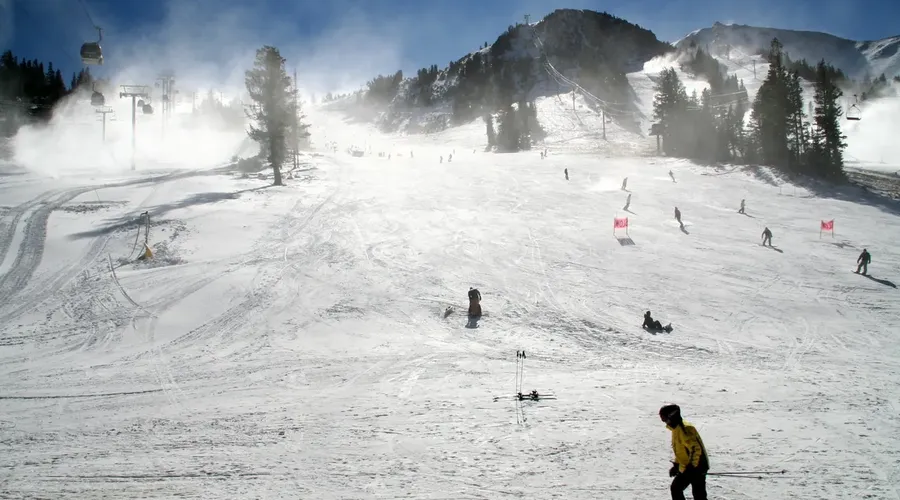
Mammoth Mountain Ski Area sits above Mammoth Lakes in California’s Eastern Sierra Nevada. This is a big-mountain ski resort rather than a compact village hill: Mammoth’s published mountain figures list more than 3,500 skiable acres (over 1,416 hectares), 180 named trails, 25 lifts and 3,100 ft (945 m) of vertical. The summit reaches 11,053 ft (3,369 m), while the published base elevation is 7,953 ft (2,424 m). For anyone wondering how big Mammoth Mountain is, those figures explain why it can comfortably fill a longer ski trip. The useful question is not just acreage, though, but which parts of the mountain suit your ability.
Mammoth’s terrain changes character from one base area to another. Beginners are not expected to tackle the steep upper mountain: Main Lodge has the dedicated Discovery Chair learning area, Canyon Lodge has beginner progression terrain around Schoolyard Express and Chair 7, and Eagle Lodge offers longer green runs as confidence improves. An easy route on one side of a large mountain can feel very different from a similarly graded run elsewhere, so start with the current trail map and follow the resort’s ability guidance rather than assuming all green or blue trails are interchangeable.
Intermediate skiers have a much larger mountain to explore once they are comfortable on varied blue terrain. Groomed pistes and linked chairlifts make it possible to build a day around flowing descents, with options around Eagle, Canyon and the Main Lodge side. The scale is a strength, but it pays to check which lifts connect your preferred area, the time needed to return to your starting lodge, and which runs remain open. Groups with different abilities will enjoy Mammoth most when they agree sensible meeting points instead of assuming everyone can ski the same route.
Advanced and expert skiers come for the upper-mountain character: open faces, steeper bowls and technical descents above the trees. The summit area and named terrain such as Cornice Bowl are a different proposition from the lower groomers. Access to exposed upper lifts is especially weather-dependent; wind, poor visibility and avalanche-control work can change what is skiable on any given day. Black and double-black classifications are relative to the mountain, not a promise about conditions, so match the terrain to your skills and follow all closures.
Snowboarders and freestyle skiers also have a reason to choose Mammoth Mountain. The Unbound Terrain Parks network is one of its most distinctive strengths, with the resort advertising 10 parks, two halfpipes and over 100 jib features during full operations. The programme spans smaller progression features and much larger jumps, so it is useful both for riders building confidence and for experienced park specialists. Features and park openings change during the season; check the current park map before choosing where to ride.
High elevation contributes to Mammoth’s reputation for a long ski season. Skiing often runs from early winter into late spring and, in exceptional snowfall years, can continue beyond that. This is not a guarantee of identical conditions all season: winter storm cycles may bring deep snow alongside lift holds, while late-season days can mean firmer mornings and softer snow later. Plan around the mountain report, open lifts and the type of skiing you enjoy rather than assuming every part of the 3,500+ acres is always available.
The mountain also has a practical side. Mammoth Lakes is the main town, with The Village and several mountain lodges forming distinct access points. The Village Gondola links The Village with Canyon Lodge when operating, and local shuttle services connect different areas. If you are planning a ski holiday with friends or family, decide whether your priority is beginner access, big-mountain terrain, park sessions or evening atmosphere before choosing a base. Mammoth Yosemite Airport is a local gateway, but available flights and accommodation choices deserve their own comparison; neither is the same question as whether Mammoth’s skiing is right for you.
For a broader California ski resorts comparison, Palisades Tahoe is another Sierra Nevada destination to consider, but Mammoth’s combination of very high summit, extensive lift-served terrain, beginner progression areas and serious freestyle parks gives it a clear identity. Its drawbacks are just as important: some upper terrain closes in storms, navigating multiple bases takes planning, and busy holiday weekends can slow your day. Choose Mammoth Mountain when you want substantial skiing and are comfortable treating the day’s weather and open terrain as part of the plan.