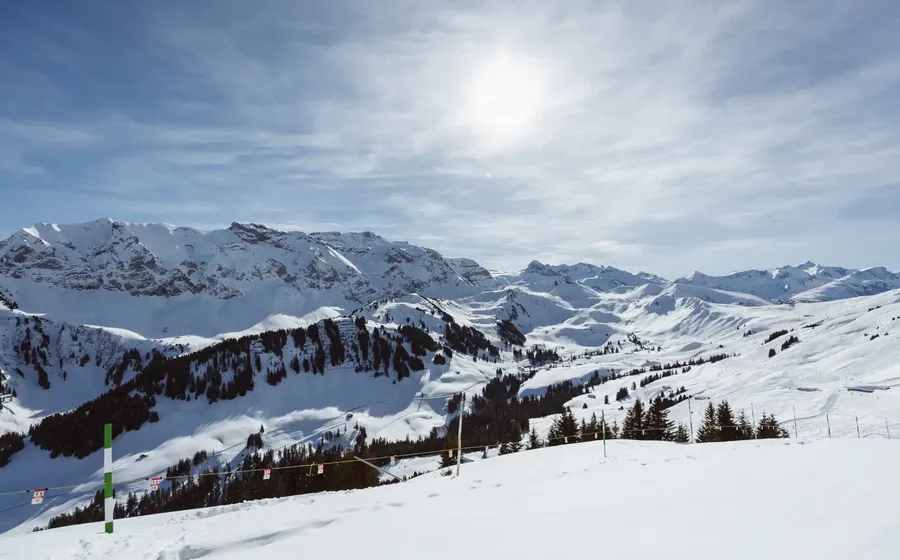
Engelberg is one of Switzerland’s most distinctive ski resorts, combining the high-altitude Titlis ski area with the sunnier Brunni side above a historic monastery village in Central Switzerland. Official Engelberg figures list 82 km of pistes and 24 ski lifts, with winter terrain stretching from around 1,000 m in the village to more than 3,000 m on Titlis.
The vertical scale is one of Engelberg’s defining features. The longest descent runs for about 12 km from the Titlis glacier towards Engelberg and drops more than 2,000 vertical metres. That gives the resort a genuine top-to-bottom mountain feel, with high-alpine terrain, mid-mountain pistes and a valley run all forming part of the same ski day when conditions allow.
Titlis is the main ski mountain and the stronger choice for confident intermediates, advanced skiers and freeriders. The ski area includes blue, red and black pistes across sectors such as Stand, Trübsee, Jochpass and Engstlenalp, with the highest terrain reaching the glacier. The Titlis Xpress and upper-mountain lifts provide the main route from Engelberg into this high-altitude network.
Intermediate skiers have enough marked terrain to build varied days, particularly around Trübsee and Jochpass. Long red and blue runs make it possible to cover substantial vertical without relying on short laps, while the descent back towards Engelberg adds a memorable end to the day when open.
Beginners are better served on the Brunni side of the valley. Official Engelberg information highlights Klostermatte as a beginner area, while Brunni’s sunny aspect and gentler terrain make it a useful place for first turns, lessons and relaxed family skiing. This creates a clear contrast with the more high-alpine character of Titlis.
Advanced skiers and snowboarders have some of Engelberg’s strongest terrain. The resort is internationally known for freeriding, with major off-piste routes accessible from the lift system. The official Big 5 concept links five classic freeride descents that can total around 10,000 vertical metres in a day under good conditions.
Those freeride routes are serious mountain terrain rather than ordinary marked pistes. Avalanche conditions, visibility and snowpack stability can change quickly, so off-piste skiing in Engelberg requires appropriate equipment, experience and current local information. Hiring a qualified local guide is sensible for visitors who do not already know the terrain.
Snow reliability is another major strength. Engelberg promotes winter skiing from October into May, with glacier terrain and high elevation supporting one of the longest seasons in Switzerland. The 2026/27 Titlis schedule currently plans glacier skiing from October through early May, with lower sectors opening progressively as winter conditions arrive.
The resort’s two-sided layout also helps when conditions differ across the valley. Titlis provides the high-altitude, snow-focused terrain, while Brunni offers a sunnier and generally gentler experience. Visitors can therefore choose between very different mountain characters without changing resort.
Snowboarders get the same broad mix of high-alpine pistes, freeride terrain and easier slopes. Engelberg’s appeal for riders is less about one dominant terrain park and more about natural mountain terrain, powder, long vertical and the ability to move from glacier-level skiing towards the valley.
The village itself is a genuine year-round community rather than a purpose-built ski base. Engelberg has a population of around 4,400 and is strongly shaped by its Benedictine monastery, founded in 1120. Restaurants, bars, hotels and local services sit within a compact valley settlement beneath the ski mountains.
That village atmosphere gives Engelberg a different feel from some of Switzerland’s more polished luxury resorts. It is particularly attractive to travellers who want serious skiing and freeride potential while still staying in a traditional Swiss mountain town with strong local identity.
For skiers comparing Swiss resorts, Andermatt ski resort is a natural alternative for high-alpine terrain and a strong freeride reputation, while Grindelwald ski resort combines major scenery with a broader linked ski-area experience. Davos ski resort offers a much larger multi-mountain network. Engelberg stands apart through its huge vertical, Titlis glacier terrain, long season and easy access to serious freeride routes.
The main compromise is that Engelberg is not one seamless piste network for every ability level. Beginners may spend more time on Brunni while stronger skiers focus on Titlis, and the most famous terrain is often weather-dependent. For confident intermediates, advanced skiers, freeriders and mixed groups who value snow, vertical and mountain character, Engelberg remains one of Switzerland’s most compelling ski destinations.