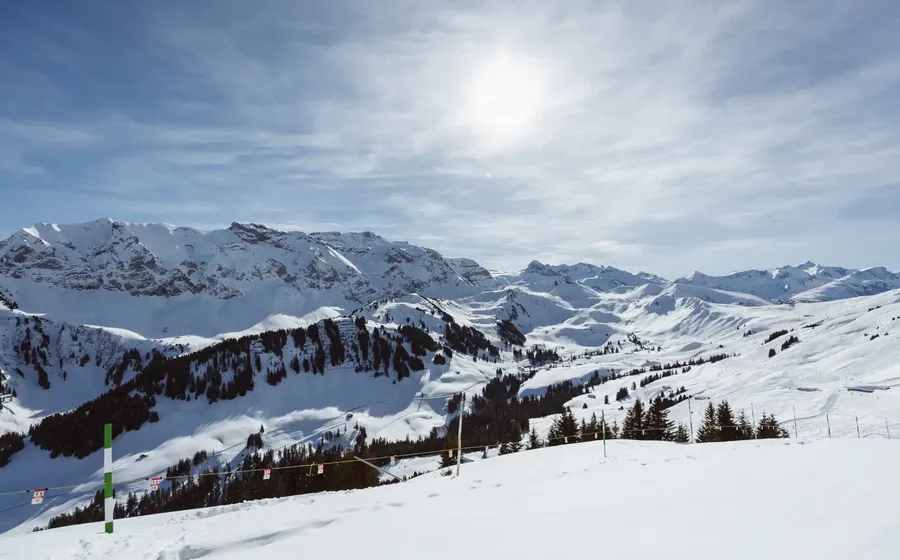
Gstaad is one of Switzerland’s most recognisable ski destinations, but its skiing is broader and more varied than the luxury image of the village can suggest. The Gstaad holiday region promotes around 200 km of ski slopes spread between roughly 1,000 and 3,000 metres, combining large linked sectors, family mountains, specialist steeper terrain and the high-altitude Glacier 3000 area.
For skiers researching Gstaad ski resort, the most important thing to understand is that this is a regional ski destination rather than one single continuous bowl above the village.
The largest interconnected part of the Gstaad ski area is the Rinderberg-Saanersloch-Horneggli ski arena. Official Gstaad information lists more than 105 km of pistes here, linking the skiing above Schönried, Saanenmöser, Zweisimmen and St. Stephan. This is the sector that gives Gstaad much of its day-to-day piste depth. It works particularly well for intermediate skiers because there is enough connected terrain for long cruising days without constantly repeating the same few runs.
The Saanersloch and Rinderberg lifts also make this part of the region a useful choice for snowboarders and freestyle skiers, with snowpark terrain included in the wider area.
Gstaad itself has several different ski mountains with their own character. Wispile is the obvious family and beginner mountain. Official resort guidance highlights its easier slopes and learning terrain, making it useful for first turns, children and skiers who want a gentler introduction before exploring the larger regional sectors.
The fact that Gstaad has village-level learning areas as well as easier mountain pistes is important for mixed groups: beginners are not forced immediately into the biggest ski arena simply to get on snow.
Eggli-La Videmanette provides a different style of skiing. Gstaad describes this as a boutique ski area where scenery, groomed pistes and mountain dining matter as much as raw mileage. The sector stretches towards Rougemont and includes the region’s longest descent from La Videmanette. It suits skiers who prefer relaxed red-run cruising, long lunches and a quieter mountain day rather than trying to maximise vertical every hour.
Eggli is also one of the areas most closely associated with the polished side of the Gstaad ski experience, but the terrain itself is useful to ordinary holiday skiers rather than being reserved for luxury travellers.
Advanced skiers should look closely at Wasserngrat. This smaller mountain above Gstaad has only a handful of pistes, but one of them is the black Tiger Run, which official Gstaad material identifies as the steepest piste in the holiday region. The black section is around 2.5 km long and gives stronger skiers a genuine technical objective.
Wasserngrat therefore matters more than its kilometre count suggests: it adds a concentrated challenge to a resort whose overall piste mix is otherwise strongest for families, intermediates and recreational skiers.
Glacier 3000 adds the high-altitude element that distinguishes Gstaad from many other resorts in the Bernese Oberland. The glacier sector reaches 3,000 m and official Gstaad information lists around 28 km of pistes there. It is the only glacier ski area in the Bernese Oberland and normally offers a markedly different high-Alpine environment from the lower Gstaad mountains.
Skiers and snowboarders will find groomed slopes, a snowpark and dramatic glacier scenery, while the Peak Walk by Tissot gives non-skiers another reason to make the journey. Glacier 3000 is not simply a snow-reliability statistic: it provides a separate mountain experience within a Gstaad week.
For intermediate skiers, Gstaad is particularly convincing because the region has several ways to build a varied week. The 105+ km Rinderberg-Saanersloch-Horneggli arena can take up multiple days, Eggli-La Videmanette adds a more relaxed scenic sector, and Glacier 3000 changes the altitude and terrain character again. Blue and red pistes dominate much of the holiday experience, so confident intermediates can cover significant distance without needing expert technique.
Skiers who enjoy exploring different valleys and lift systems may see the fragmented layout as a strength rather than a weakness.
Beginners and families are another core Gstaad audience. Learning areas are spread through the region, including options in Gstaad, Zweisimmen, Saanenmöser, Schönried and Lauenen. Wispile is especially useful for family skiing, and the larger sectors give improving beginners room to progress when they are ready for longer pistes.
Families should still choose their daily mountain carefully: because the ski region is distributed across several sectors, the easiest lesson location or child-friendly lift may not be the same place that advanced members of the group want to ski.
Snowboarders should not dismiss Gstaad as a traditional skier-only resort. Official Gstaad information promotes snowparks within the region, including freestyle terrain in the larger ski areas and at Glacier 3000. The broad groomed pistes around Saanersloch and Rinderberg also suit carving and general snowboard progression.
As with skiing, the best mountain depends on ability and priorities: families may favour Wispile, mileage-focused riders can use the Rinderberg-Saanersloch-Horneggli arena, and stronger freestyle riders may want to include Glacier 3000.
The Gstaad piste map can initially look more complicated than a conventional single-valley resort because the 200 km figure is spread across several mountain areas. That is worth understanding before buying a ski pass or planning each day. Rinderberg-Saanersloch-Horneggli is the largest connected arena, while Eggli-La Videmanette, Wispile, Wasserngrat and Glacier 3000 each add different terrain.
A successful Gstaad ski holiday is therefore less about starting from one lift every morning and more about choosing the mountain that fits the day’s skiing.
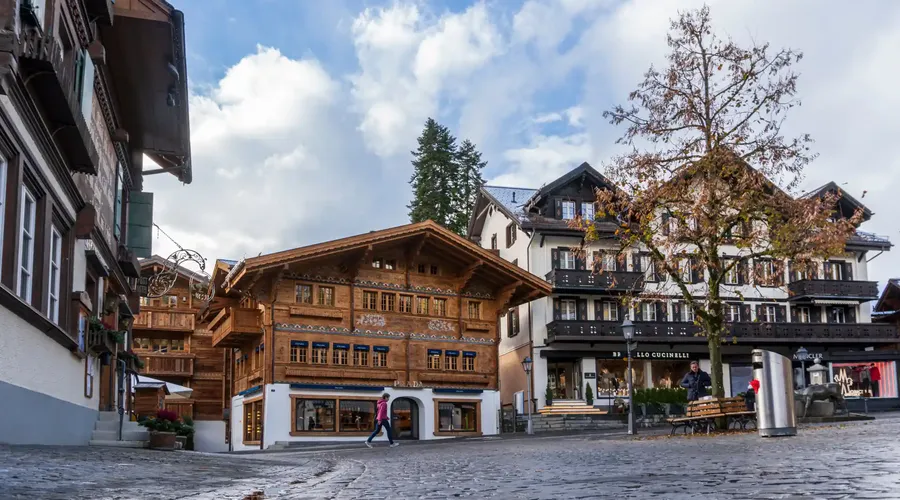
The village experience remains a major part of Gstaad’s appeal. Gstaad is internationally known for luxury hotels, designer shopping, chalet architecture and high-end dining, but the ski destination is not only for premium travellers. The wider Saanenland includes villages such as Saanen, Schönried, Saanenmöser, Zweisimmen and Rougemont, and the regional mountain system serves a much broader mix of families, regular ski-holiday visitors and local skiers.
Budget still matters because Swiss accommodation, lift passes and mountain restaurants can be expensive, but the skiing itself has a far wider audience than the resort’s celebrity reputation implies.
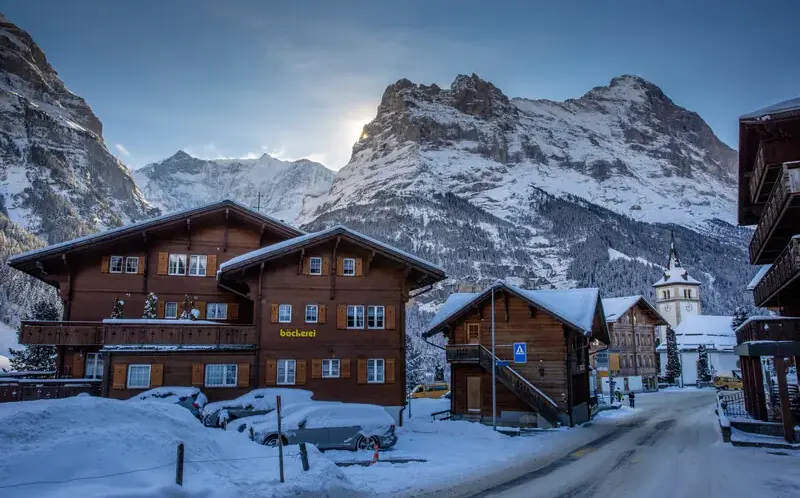
Gstaad also makes sense as part of a wider Swiss-resort comparison. Travellers considering the Bernese Oberland may also be looking at Grindelwald, Wengen, Mürren or Adelboden-Lenk. Those resorts have different strengths: the Jungfrau destinations focus heavily on linked mountain scenery around the Eiger, Mönch and Jungfrau, while Adelboden-Lenk offers another substantial Bernese Oberland ski domain.
Gstaad’s distinguishing combination is its spread of mountain sectors, refined village atmosphere, family-friendly skiing and Glacier 3000, creating a different proposition from the neighbouring Bernese Oberland resorts.
Access is another reason Gstaad works for international visitors. Geneva Airport, EuroAirport Basel-Mulhouse-Freiburg and Zurich Airport are all practical gateways, with the best choice depending on flight schedules and onward rail or road connections.
Gstaad is a well-established Swiss destination with multiple international gateways rather than a remote one-airport ski resort.
Non-skiers and mixed groups have more to do than simply wait in the village. Glacier 3000 offers the Peak Walk by Tissot and high-Alpine sightseeing, while winter walking, snowshoeing, sledding, mountain restaurants and scenic rail journeys are spread across the holiday region. This helps Gstaad compete for family and mixed-interest trips where not everyone wants to ski from first lift to last.
It also reinforces why the resort is strongest as a complete winter destination rather than a pure piste-mileage proposition.
The main weakness is the same feature that creates much of the variety: the ski areas are not all one continuous lift-linked domain. Skiers who want to move from the Rinderberg side to Glacier 3000 or between some of the smaller Gstaad sectors need to plan transport rather than expecting to ski every connection. Expert terrain is also less dominant than the resort’s 200 km headline might imply.
The Tiger Run and selected steeper pistes provide challenge, but advanced skiers should actively seek those sectors out.
For most visitors, Gstaad is strongest when judged as an all-round Swiss ski region. Around 200 km of skiing, the 105+ km Rinderberg-Saanersloch-Horneggli arena, family-friendly Wispile, relaxed Eggli-La Videmanette, the Tiger Run at Wasserngrat and Glacier 3000 create far more variety than the luxury label alone suggests.
Beginners, intermediates, families and mixed groups have especially strong reasons to consider the resort, while advanced skiers and snowboarders can build a worthwhile week by targeting the right mountain sectors. That combination of ski-area variety, high-altitude terrain and a distinctive Bernese Oberland resort experience gives Gstaad broad appeal beyond its luxury reputation.