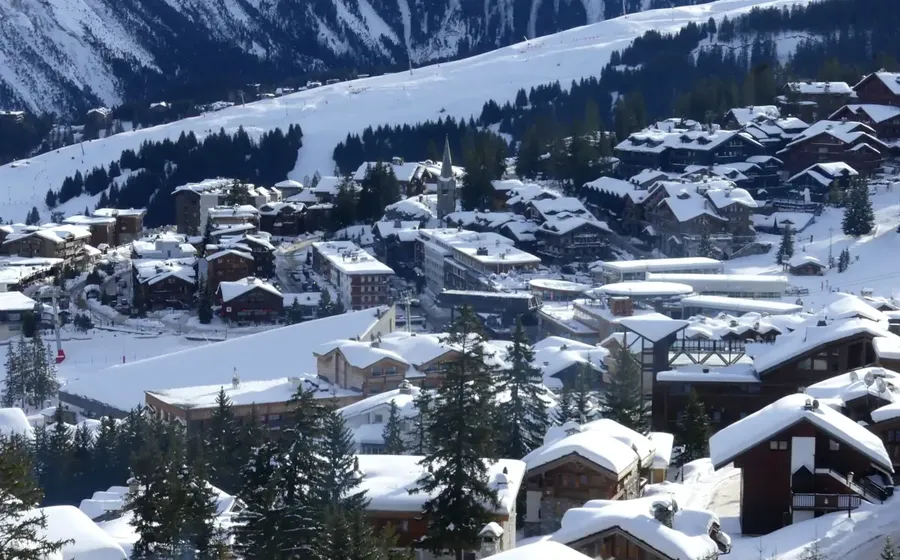
Flaine is a purpose-built ski resort in Haute-Savoie that stands out for two reasons: its high-altitude bowl and its direct place within the Grand Massif. The Flaine ski area runs from about 1,600 m to 2,500 m and currently has 64 marked runs served by 24 lifts. For skiers wanting more mileage, Flaine links directly into the 265 km Grand Massif, connecting Flaine with Les Carroz, Morillon, Samoëns and Sixt-Fer-à-Cheval.
Snow reliability is one of Flaine’s strongest advantages. The resort sits in a natural snow bowl with a north-west-facing position that helps it collect and preserve winter snow. Flaine also supplements natural cover with extensive snowmaking on lower parts of the area. Combined with the 1,600–2,500 m altitude range, this makes Flaine particularly attractive for skiers who prioritise dependable conditions through the main winter season.
The local terrain works well for mixed-ability groups. Wide blue and red pistes give intermediates plenty of cruising, while beginners have dedicated learning terrain and can progress onto longer easy runs. Stronger skiers can explore steeper sectors such as the Combe de Gers and use the wider Grand Massif for more variety. The terrain was shaped with skiing flow in mind, and Flaine’s broad open bowl makes navigation relatively simple compared with more fragmented mountain resorts.
One of the signature ski journeys is the Cascades piste. Starting high above Flaine, this long red descent runs around 14 km towards Sixt-Fer-à-Cheval, dropping roughly 1,700 m through open mountain terrain and forest. It is a good example of why staying in Flaine does not mean being limited to a compact local circuit: the resort can be the starting point for much longer days across the Grand Massif.
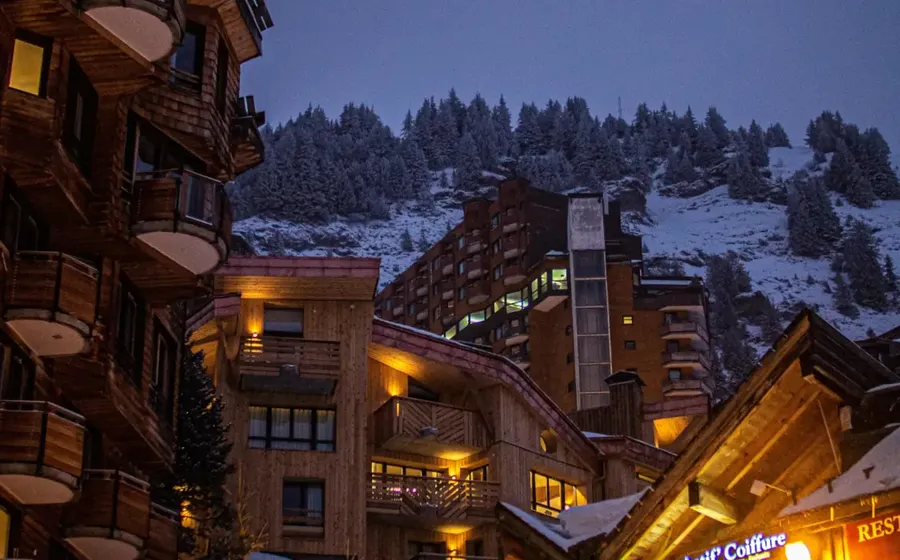
Flaine’s resort design is another defining feature. It was created as a modern ski-in ski-out destination and is known for the architecture of Marcel Breuer, with bold concrete buildings, pedestrian areas and public artworks. Some visitors love the distinctive modernist identity; others prefer the chalet atmosphere of an older Alpine village. Functionally, however, the compact layout makes lifts, accommodation and services easy to reach without complicated daily transport.
Families and mixed groups benefit from that convenience. Ski schools, beginner areas and easy access to the snow front simplify mornings, while stronger skiers can leave the local sector and explore the wider domain. The resort is also well suited to travellers who value skiing over nightlife: there are bars and restaurants, but Flaine is generally more about snow access and practical resort living than a large late-night scene.
There are trade-offs. The architecture is deliberately modern rather than traditionally Alpine, weather can reduce visibility in the open bowl, and some long Grand Massif touring days require attention to lift closing times. For a first Flaine ski trip, start by learning the local bowl and then use the Grand Massif connection for longer exploration days. Choose Flaine if your priorities are snow reliability, straightforward ski access, strong intermediate terrain and the ability to scale from a compact resort base into a 265 km linked ski area.