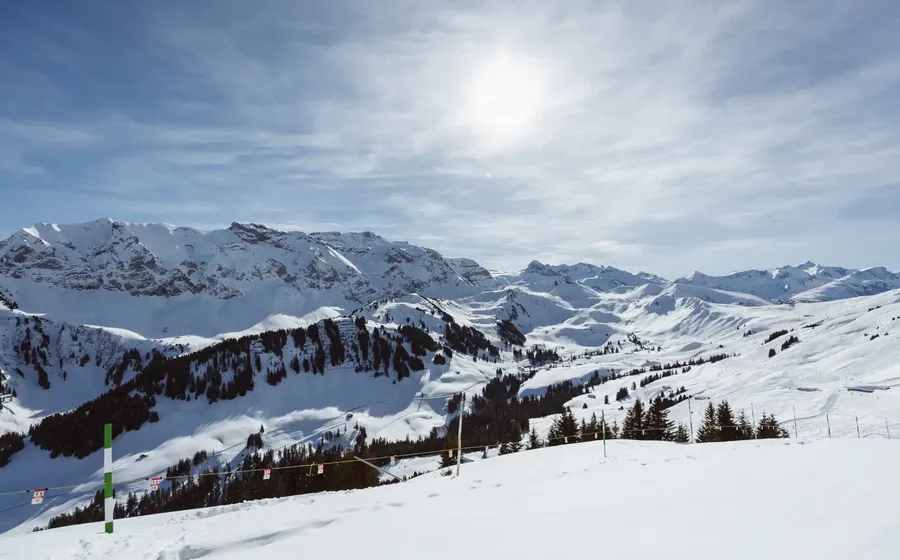
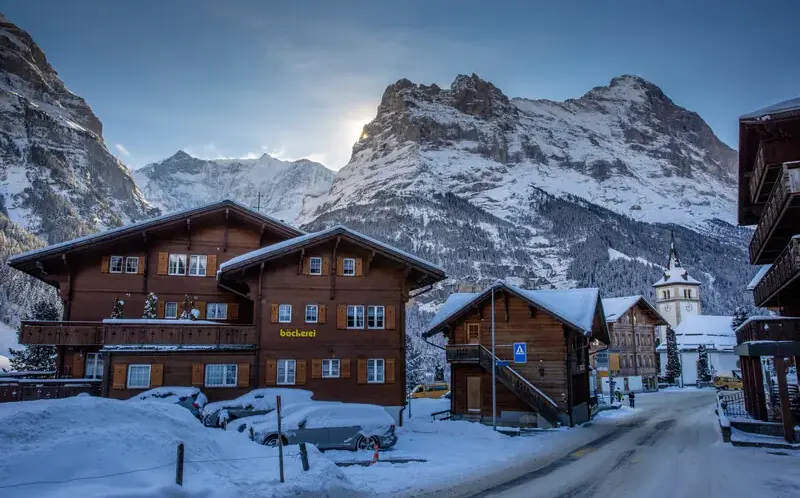
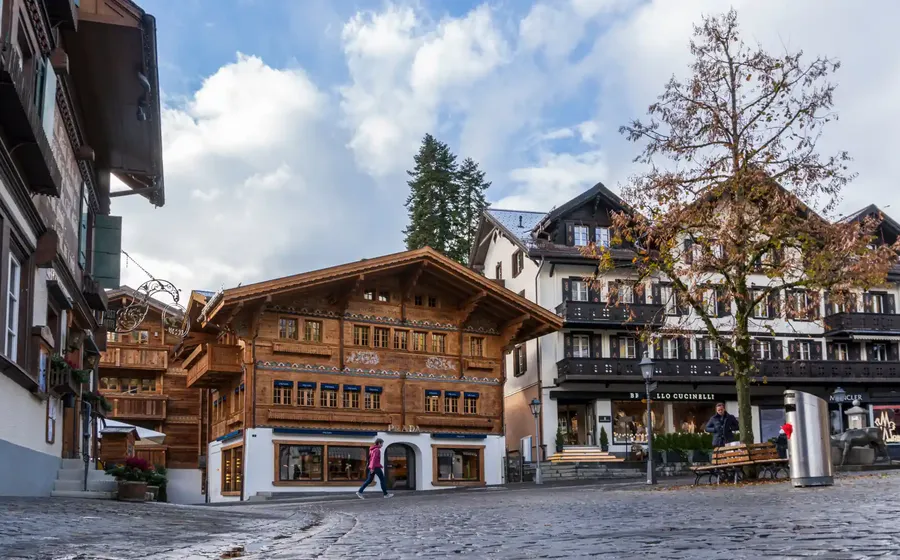
Wengen is one of Switzerland’s classic ski resorts: a car-free mountain village above the Lauterbrunnen valley with direct access to the Grindelwald-Wengen ski area and some of the best-known scenery in the Jungfrau Ski Region. The resort sits at around 1,274 m and combines traditional hotels, rail-based access and a compact village centre with skiing around Männlichen, Kleine Scheidegg and the Lauberhorn. For skiers comparing Wengen with larger Swiss bases, the attraction is not simply piste mileage. It is the combination of a quiet traffic-free village, strong intermediate terrain, easy mountain-rail connections and direct access to one of the most recognisable ski landscapes in the Alps.
The main skiing from Wengen forms part of the shared Grindelwald-Wengen ski area, which official Jungfrau slope data lists at about 101 km of pistes. Wengen is therefore not an isolated local hill: its lifts and mountain railway connect into a substantial ski network stretching across Männlichen, Kleine Scheidegg and towards Grindelwald. The wider Jungfrau Ski Region expands the choice further to about 211 km across Grindelwald-Wengen, Grindelwald-First and Mürren-Schilthorn. That distinction matters when comparing a Wengen piste map or ski pass, because the village’s immediate skiing is the Grindelwald-Wengen sector while the regional pass can open up the other Jungfrau areas for day trips.
Wengen is particularly good for intermediate skiers. A large share of the terrain above the village is blue or red, with long scenic cruising on Männlichen and around Kleine Scheidegg. The Wengen-Männlichen cable car gives fast access from the village to high open slopes, while the Wengernalp Railway climbs from Wengen towards Wengernalp and Kleine Scheidegg. From there, skiers can move across the shared area beneath the Eiger, Mönch and Jungfrau. This makes Wengen a strong choice for skiers who value long mountain days and varied cruising more than large numbers of extreme pistes.
Beginners are also well served, although it helps to understand the layout. There are gentle learning slopes in and around the village, while higher beginner areas at Männlichen and Kleine Scheidegg provide more reliable snow and space for progression. Once confidence improves, the shared ski area has plenty of easier blue runs that allow newer skiers to explore beyond a nursery slope. Families and mixed-ability groups benefit from this progression because stronger skiers can head farther across the mountain while beginners remain within the same general lift system.
Advanced skiers come to Wengen for a different reason: the Lauberhorn. The resort hosts the famous Lauberhorn World Cup downhill, and sections of the race route become part of the public ski area outside competition periods. The full race course is significantly more demanding than Wengen’s typical cruising terrain, with steep sections and a long vertical descent towards the village. There are also harder pistes around Eigergletscher, Wixi and the upper Grindelwald-Wengen sector. Expert skiers seeking a larger concentration of steep terrain may still want to spend a day in Mürren-Schilthorn, but Wengen offers enough challenging skiing to add variety to an intermediate-focused week.
Männlichen is one of Wengen’s key ski mountains. The cable car rises directly from the village, making it an important first lift for many visitors. The slopes around Männlichen include easy and intermediate terrain, panoramic cruising and connections towards Kleine Scheidegg. It is also a useful area for families and improving skiers because the terrain is generally less intimidating than the Lauberhorn name might suggest. When choosing accommodation in Wengen, walking distance to the Männlichen cable car can be a real advantage for skiers who want the quickest possible start to the day.
Kleine Scheidegg is the other major mountain hub. It sits between Wengen and Grindelwald and can be reached from Wengen by the Wengernalp Railway. From here, skiers can access pistes beneath the Eiger, connect towards Eigergletscher and continue through the broader Grindelwald-Wengen network. Kleine Scheidegg is also an important transport point for Jungfraujoch trips, so Wengen works well for groups that want to combine skiing with one of the region’s most famous mountain excursions. The railway-based layout gives the resort a distinctive rhythm: trains are part of the ski day rather than simply a way of reaching the village.
The relationship between Wengen and Grindelwald is central to understanding the ski area. Wengen sits on the Lauterbrunnen side of the mountain, while Grindelwald lies beyond Männlichen and Kleine Scheidegg. Both villages feed into the same Grindelwald-Wengen ski sector, but they offer very different resort experiences. Wengen is smaller, car-free and more traditional, whereas Grindelwald is larger and gives easier access to both the Grindelwald-Wengen and Grindelwald-First sectors. Skiers deciding between the two should therefore compare village atmosphere, accommodation location and which lifts they expect to use most rather than assuming the ski terrain is completely separate.
Wengen is car-free, and that shapes both the experience and the journey. Visitors normally travel by train to Lauterbrunnen and then take the Wengernalp Railway up to Wengen. The final rail journey from Lauterbrunnen is short, and once in the village most hotels, restaurants and lifts are reached on foot. This makes Wengen particularly attractive for travellers who do not want to hire a car. It also means arrival planning matters: luggage, train connections and hotel transfer arrangements are worth checking in advance, especially for late arrivals or families carrying ski equipment.
For international travel, Zurich Airport is generally the strongest major-hub option for Wengen, with rail connections through the Swiss network towards Interlaken Ost and Lauterbrunnen. EuroAirport Basel-Mulhouse-Freiburg can also work well depending on flights, while Geneva Airport is a longer but still viable alternative. Travellers comparing airports for Wengen should look at total journey time, rail frequency and arrival time rather than simply straight-line distance. The key public-transport chain is airport to Interlaken Ost, onward to Lauterbrunnen, then the mountain railway to Wengen.
Wengen’s location also makes it useful for exploring the wider Jungfrau Region. Lauterbrunnen is directly below the village and acts as the transport gateway for both Wengen and the opposite side of the valley. Mürren is not piste-linked to Wengen, but it can be reached for a separate ski day via Lauterbrunnen and the valley’s connecting transport. Grindelwald is connected through the shared ski area and mountain railway network. This creates a strong regional cluster: skiers can base themselves in Wengen for most of the week while still understanding how Grindelwald, Mürren and the wider Jungfrau Ski Region fit together.
Snow conditions in Wengen vary by altitude. The village sits lower than the highest ski terrain, so snow quality on the final runs back can be more weather-sensitive during warm periods. Higher slopes around Männlichen, Kleine Scheidegg and Eigergletscher generally provide the more reliable part of the ski day. Anyone booking very early or late in the season should check current lift and snow reports rather than relying only on historic averages. The official Jungfrau season dates and slope openings are weather dependent and can differ between the Grindelwald-Wengen, Grindelwald-First and Mürren-Schilthorn sectors.
Away from skiing, Wengen’s car-free layout is one of its biggest strengths. The village has hotels, apartments, restaurants and bars but feels calmer than larger road-access resorts. Winter walking, sledging, scenic rail journeys and mountain viewpoints give non-skiers useful options, while Jungfraujoch is one of the obvious high-altitude excursions. Après-ski exists, but Wengen is better suited to visitors who want atmosphere and mountain scenery rather than a party-first resort. Families, couples and mixed groups often value that balance.
A Wengen ski holiday is therefore best for travellers who want a traditional Swiss village with excellent intermediate skiing, famous Lauberhorn terrain and strong public-transport access. The resort’s real strength is how much skiing sits behind a relatively compact, peaceful base: the 101 km Grindelwald-Wengen area is directly accessible, the wider 211 km Jungfrau Ski Region adds further variety, and neighbouring Grindelwald and Mürren provide useful comparison points for planning a longer stay. Use Wengen as the base if car-free village character, Männlichen and Kleine Scheidegg access, rail travel and classic Jungfrau scenery matter more to you than nightlife or expert-only terrain.